
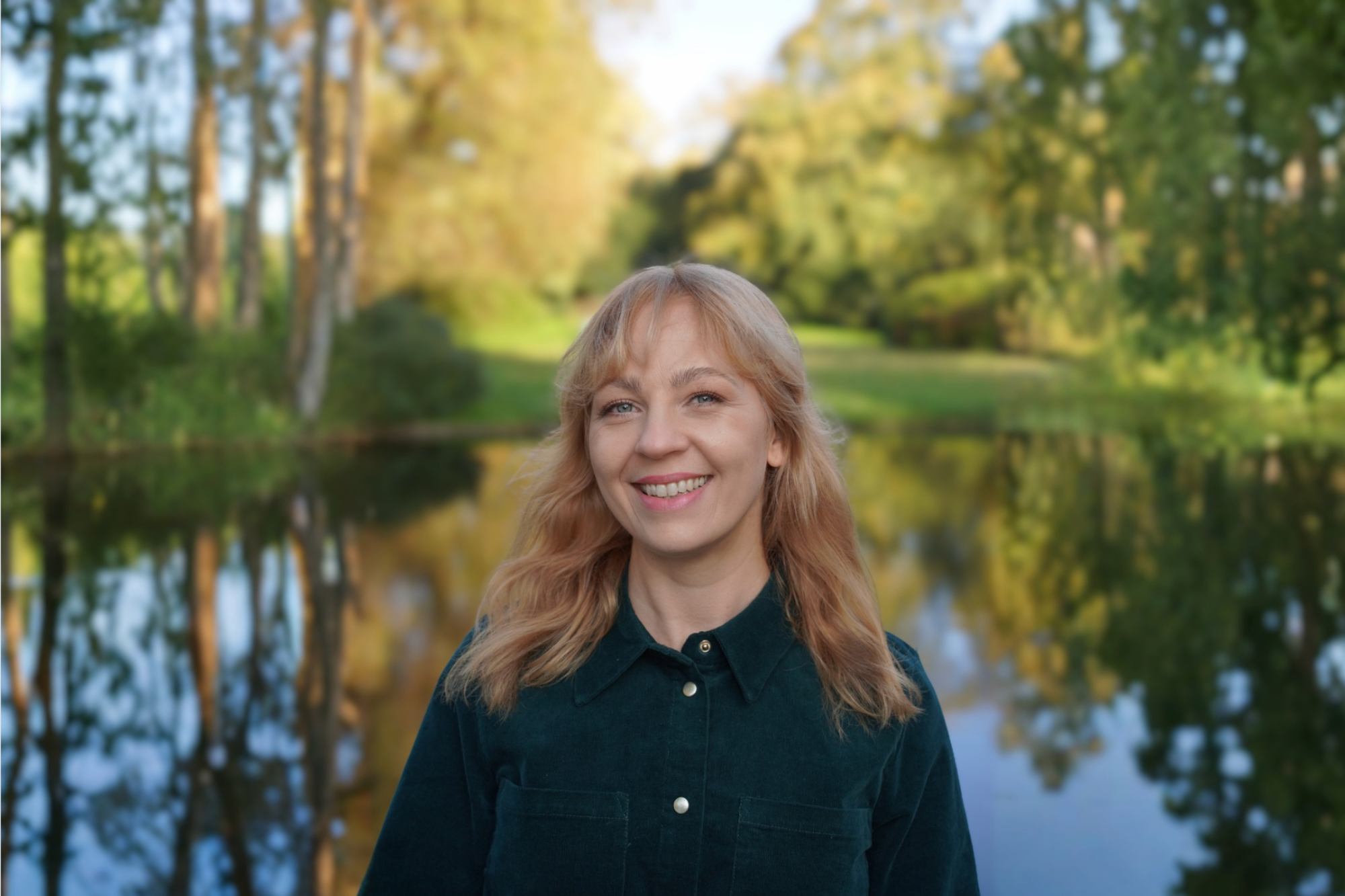
An “As Told To” interview by Kristaps Kovalonoks, Research Coordinator at Aalto University School of Business.
This interview is part of a first person storytelling series highlighting the journeys, ideas, and insights of members and friends of Aalto University’s Entrepreneurship Unit (ENTU). Real stories, told in their own words.
What takes a researcher from Aalto University to Copenhagen Business School, while keeping strong ties to the people and ideas that shaped her academic path in Finland? For Vera Haataja, it began with a long-standing interest in entrepreneurship as something deeply connected to people, societies, and responsibility. Now working as a postdoctoral researcher at Copenhagen Business School in the Rethinking Entrepreneurship project, she reflects on her doctoral journey, the importance of supportive supervisors and colleagues, and why staying curious matters more than obsessing over outputs.
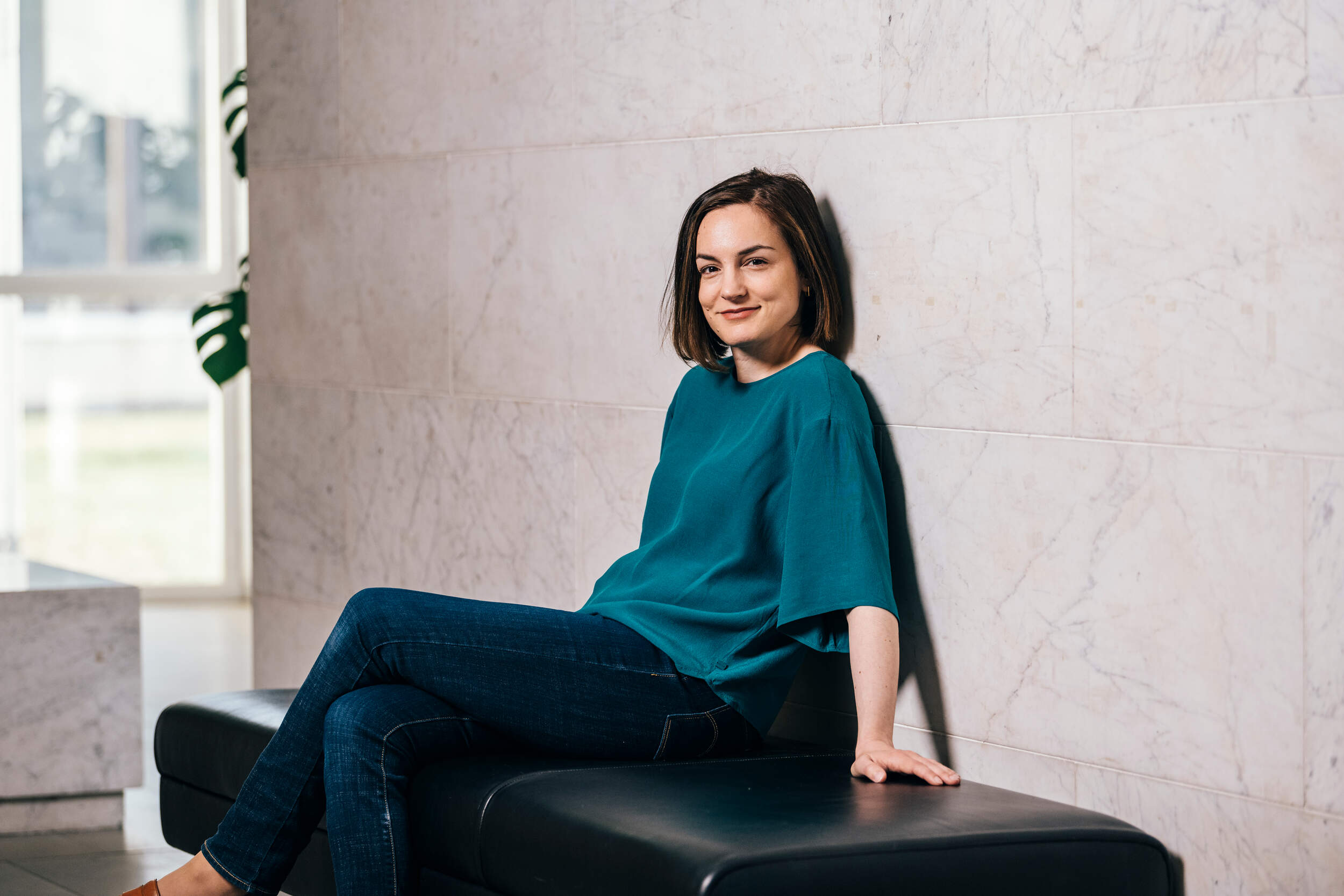
I am Vera Haataja, and I currently work as a postdoctoral researcher at Copenhagen Business School in the Rethinking Entrepreneurship project. It is a large research project, where each of us works on our own research while contributing to a shared focus on entrepreneurship in society and more humanistic perspectives. Alongside my research, I also teach courses related to entrepreneurship.
I was not specifically targeting Denmark. I have generally tried to stay open to different opportunities, and in this case it was very much about good timing and, in particular, the fit between my research and the position. When the position opened up and I saw the job advertisement, it immediately felt like a perfect fit for my research interests and a natural next step.
What I especially appreciate about the Rethinking Entrepreneurship project is that we are able to continue doing our own research, rather than only working on predefined project tasks. At the same time, there are many synergies within the group. We can collaborate, develop new papers together, and initiate new research ideas, which makes the work both flexible and inspiring.
My own interests focus on entrepreneurship and ethics, particularly questions of responsibility. I also continue to explore social and individual change through entrepreneurship, building directly on the themes I worked with during my PhD.
From my perspective, there is no single clear difference. In my own department at Copenhagen Business School, the Department of Business Humanities and Law, and within the Rethinking Entrepreneurship group, the focus is strongly on entrepreneurship in society and on more humanistic perspectives.
At the same time, CBS also includes departments where entrepreneurship research is more innovation driven or more traditional. In that sense, the landscape feels quite similar to Aalto. Aalto is well known for its work in sustainable and social entrepreneurship, but it also has a broad entrepreneurship ecosystem that includes startups and commercially oriented approaches. From my experience, both institutions bring together multiple ways of thinking about entrepreneurship, rather than promoting one single perspective.
Aalto has always been major part of my path. I completed both my bachelor’s and master’s degrees there, and it was during my master’s thesis that I also started working as a project coordinator in the Entrepreneurship Unit, although it was not the same ENTU as it is today.
The project focused on building entrepreneurial capacity in higher education and was a collaboration between Aalto University and Cairo University in Egypt. Being involved in that project and working closely within an academic entrepreneurship environment gradually drew me deeper into entrepreneurship. Through that experience, my interest shifted from practice toward research, and that was when I began to see academia as something I wanted to pursue more seriously.
What I valued most during my doctoral studies at Aalto were the people and the chance to work alongside colleagues from many different backgrounds. Being surrounded by thoughtful and curious people was very inspiring, and that sense of community mattered a lot to me.
My PhD journey was not a typical one. It took time, and there were several organisational changes along the way. My original supervisor retired, and for a period I was trying to find my place again and new supervision. During that time, I was also doing other work, including teaching at a primary school. I remained connected to ENTU throughout, but often more sporadically, and I worked on my PhD part time for much of the journey.
A real turning point came when Ewald Kibler took on the role of supervisor and encouraged me to finalise the thesis. From that moment on, the process gained a clearer sense of direction and things started to come together. Funding uncertainty was also a very real part of my experience. Not knowing whether you will have funding in six months can be difficult, and at the time I was a single mother, which made that uncertainty especially challenging. Later on, I was fortunate to receive longer funding periods, and that support played an important role in allowing me to finalise the PhD.
Looking back, this period shaped how I see research today. It taught me that good research takes time, and that it is built through relationships, support, and persistence. Even when the path is not straight, it is still possible to move forward and find your way.
This focus has always been part of my mindset. Even when I started business studies at Aalto, I was interested in business primarily in relation to people, societies, and broader questions of development, rather than business for its own sake.
Alongside my studies at Aalto, I completed minor studies in cultural studies focusing on Latin America at the University of Helsinki, which had a strong influence on how I think. My master’s thesis focused on capability building in post-disaster Haiti in the Caribbean. At the same time, I was working in the Entrepreneurship Unit at Aalto, where there was similar thinking around social change and entrepreneurial activity. Gradually, these ideas began to merge, and I became particularly interested in empowerment and in how entrepreneurship could potentially be empowering.
Academic research was not always part of my plan. It became a real possibility through those cultural studies and through my thesis work, when I realised how interesting and meaningful this kind of research could be. That process helped me see that this was a direction I wanted to pursue more seriously.
It is difficult for me to point to one single moment, because what stands out most from my time at Aalto are the people. I met my closest friends there, and I was surrounded by colleagues who became very important to me. That sense of connection is the common thread that runs through the whole period. My PhD defence was also a meaningful moment, as it marked the end of a long chapter.
One person who has been especially important to me is Virva Salmivaara. She is a very dear friend and was a central part of my PhD journey. Even though we now live in different countries, Aalto and ENTU still connect us. Whenever we are in Helsinki, we meet, and I feel very grateful that our paths crossed there.
For me, being part of the Aalto alumni community is very much about connection and continuity. It has been important to me to build a bridge between ENTU and the Rethinking Entrepreneurship community at Copenhagen Business School, because there are great people and many shared interests in both places. I feel fortunate to have a foot in both contexts and to connect my past and present work in a way that benefits both sides.
In very concrete terms, the connection continues through people. Whenever I am in Finland, I try to visit Aalto and meet former colleagues for coffee and conversation. I am also still collaborating with people from Aalto, including ongoing co-authored work, so the alumni relationship is not just symbolic but very much part of my everyday academic life.
Stay curious and patient. It is very easy to lose interest in your research if you focus too much on outputs, next steps, and publishing strategies.
Good research takes time. You need to allow yourself to follow a winding path, to make discoveries, and sometimes to feel a bit lost. That is part of the process. Things do come together when you keep working, stay committed, and give yourself the time you need. It will work out, but it does require patience and hard work.