
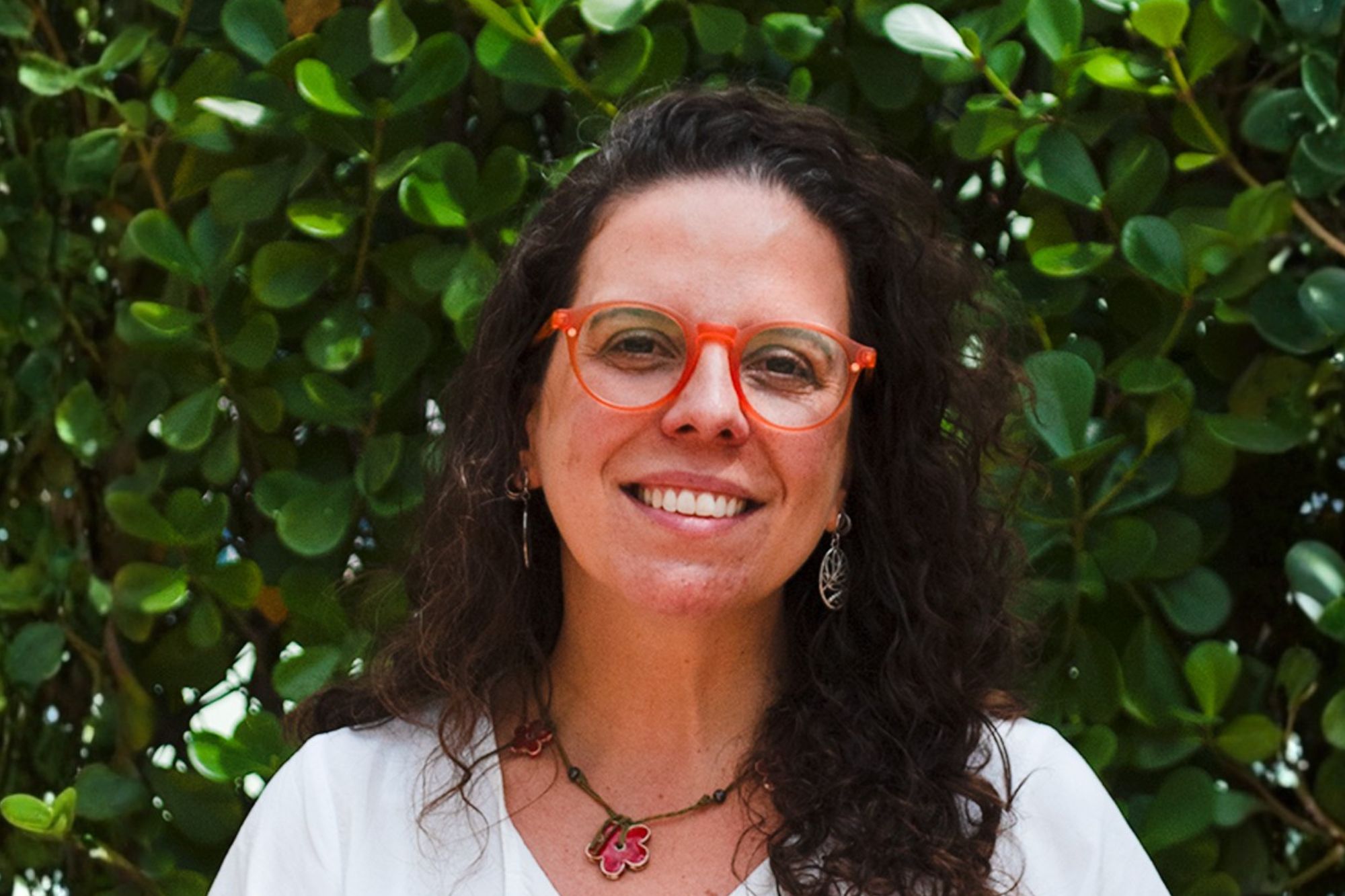
An “As Told To” interview by Kristaps Kovalonoks, Research Coordinator at Aalto University School of Business.
This interview is part of a first person storytelling series highlighting the journeys, ideas, and insights of members and friends of Aalto University’s Entrepreneurship Unit (ENTU). Real stories, told in their own words.
What brings an experienced lecturer, consultant, and researcher from Brazil to Finland without ever having visited the country before? For Juliana Rodrigues, it was a doctoral project rooted in social and environmental questions and a desire to build meaningful dialogue between Global South and Global North perspectives. Now a doctoral researcher at Aalto University’s Entrepreneurship Unit, completing a double-degree PhD in collaboration with FGV EAESP in Brazil, Juliana reflects on the non-linear path that led her to Finland, the realities of working across two academic systems, and what she has learned from communities, colleagues,and everyday life in Finland.
I am Juliana Rodrigues. I am originally from Brazil. I have worked across different industries, but for more than ten years my focus has been on social innovation, social entrepreneurship, and sustainability more broadly, in Brazil, Latin America, and other parts of the world. My work has combined research, consulting, and teaching.
What brought me to Finland was my doctorate. When I decided to do a doctorate at Aalto University, I moved to Finland, but I had never been here before. It really was a leap of faith.
For me, choosing the doctorate was never only about getting a degree. It was very intentional. I wanted to work on certain topics, join certain discussions, contribute in a meaningful way, and stay connected to practice.
I did not originally know Aalto. I was exploring different possibilities and speaking with professors whose research style and interests felt close to what I wanted to do. Through those conversations, I was connected to people in Finland, and then to Aalto. I applied to several universities in different countries, got accepted in some and not in others, and then had to make a complex decision.
A key factor was that Aalto already presented an opportunity to enable my intention to do the doctorate via a double degree, with procedures for a cotutelle agreement in place. It mattered to me because I want to contribute to nurture meaningful dialogue between Global North and Global South perspectives. Finland also seemed like a good option for my family, and when I began learning about Aalto and speaking with people here, it felt like a place where I could do the kind of work I cared about.
For me, the move into doctoral research was not a sudden decision, but something that developed over time. My entry into academia actually came through teaching. I started lecturing in 2012, and that was when I realised how much I enjoyed being an educator. As I continued teaching, I also became more aware that to keep developing in that direction, I would need formal research training.
At the same time, I began questioning the content of my work. Much of my professional background was in corporate communications, reputation, and branding, but my interests were increasingly moving towards sustainability, social inequalities, and social change. Doing a research master’s degree in Brazil between 2014-2016 was a very intentional step in that direction, shifting my focus towards social entrepreneurship and social innovation. During that period, I was still working professionally alongside my studies, which meant navigating both worlds at once.
Later, I had the opportunity to work as travelling faculty in an international multi-country study programme. It was honestly transformative, and also delayed my PhD, because it was a unique experience that I was eager to embrace for the valuable learning and growth it offered. I often joke that ‘’travelling professor’’ was probably the coolest job title I have ever had. When I returned to Brazil, the decision became clearer: I wanted to do a doctorate, and I wanted it to be international, connecting Brazil with another country. That desire to build meaningful Global South–Global North dialogue was a key reason why pursuing a PhD eventually felt like the right next step.
In practice, I am formally affiliated with both Aalto University and FGV EAESP, while working on one doctoral project and one thesis. A double-degree arrangement is usually defined in a case by case basis through a specific cotutelle agreement. In my case, it means that I need to meet the academic requirements of both institutions, navigating when these requirements are structured a bit differently.
For instance, in terms of coursework, I completed qualitative methods courses in Brazil and transferred those credits to Aalto, and quantitative courses in Finland that were transferred to FGV EAESP. I am supervised by Myrto Chliova at Aalto and Marlei Pozzebon at FGV EAESP, and each provides guidance from their institutional and disciplinary perspective.
I am currently in the final stages of my PhD and expect to complete it in 2026. In practice, this means that I will submit and defend the same thesis, following the formal procedures required by both universities. The outcome will be a double degree, reflecting the fact that the research was developed and examined within two academic systems. In my case, it also has an interdisciplinary approach, as here at Aalto, I am affiliated with the Entrepreneurship Unit, while at FGV EAESP, I am affiliated with the program in Public Administration, with emphasis on civil society.
It is difficult to compare doctoral workloads, because every PhD is different. I would not describe it as simply ‘’more work’’, but rather as working across two systems. That requires planning and awareness of how each institution functions.
For example, the publication requirements are similar, but with slight differences, which require more attention to some details. For example, both require at least three essays, one of which must be single-authored. But while at Aalto the order of authorship can vary, at FGV EAESP I need to be first author in all of them. There are also differences in procedures and timelines around the defence. Because of this, I have needed to be very deliberate in how I plan my research, publications strategy, and milestones. It requires coordination, but it has also been a learning process and an important part of my doctoral experience.
My research is rooted in alternative perspectives on entrepreneurship. I initially entered the field through social entrepreneurship, social enterprises, and social innovation, but over time, my focus has shifted towards more democratic and participatory ways of organising. Rather than starting from market-based solutions, I look at how communities themselves organise social and economic activities in response to social and environmental challenges.
A key part of my work focuses on community-based enterprises in the Global South, particularly in the Amazon rainforest region. In many of these contexts, social and environmental issues cannot be separated, as nature is deeply intertwined with people’s livelihoods, cultures, and everyday practices. In Brazil, this is often described through the concept of socio-biodiversity enterprises, which refers to initiatives that protect biodiversity while also valuing local knowledge, traditions, and social relations. To study this, I conducted ethnographic fieldwork over five months, across three research visits, working closely with communities and organisations in the same Amazon region. Through this research, I aim to learn from these practices and from the communities’ perspectives and use those insights to rethink how entrepreneurship and organising are understood more broadly and more inclusively.
Overall, my experience in Finland has been very good. I really enjoy living here, especially the closeness to nature, which has become an important part of my everyday life. When my husband and I moved from a much warmer climate, we made an implicit agreement from the beginning that we would not complain about the cold or the weather, since we knew exactly what kind of country we were moving to. Doing a PhD is also a period when you can still build friendships, and over the years I have created a close circle that includes both international and Finnish friends, and they make all the difference in how I experience the doctorate and Finland
There are also small but meaningful things I truly appreciate, such as sauna culture and the public library system. I even developed a teaching case on Finnish public libraries, partly because I wanted to understand more deeply something that I personally value so much here. These everyday elements have played an important role in helping Finland feel like home.
Moving to Finland was also a family decision. I came with my husband, who is an academic with a PhD in engineering. At the time, he was teaching in Brazil and was also considering moving closer to applied research and industry. When we moved in 2021, Finland felt like a good option for both of us. He actively sought out support networks for highly skilled professionals, including initiatives such as the Career Club promoted by the City of Espoo. This support played an important role in his integration. Within less than a year, he found a position in the industry. Looking back, his transition worked very well, but I am also aware that timing mattered. The reality when we made the decision to move was different from the situation today. Knowing what I know now, and seeing how the context has changed, I am not entirely sure I would have made the same decision under the current conditions. Overall, I feel very connected to Finland and genuinely appreciate living here, while also recognising that the broader context for international families has become more complex.
There is a word used in the unit that I really like – ENTUsiastic. I don’t remember who first started it, but it captures the atmosphere very well.
ENTU is a team of motivated scholars, and that motivation shows in everyday interactions. People have different styles, research interests, and perspectives on entrepreneurship and academic work, and this diversity is treated as a strength. The aim does not seem to be convincing others or reaching quick consensus, but to create space for dialogue, discussion, and constructive disagreement. Through these exchanges, ideas become sharper and research becomes stronger.
For me, this willingness to listen to different viewpoints is what defines the culture at ENTU. It creates an environment where learning happens collectively, and where both doctoral researchers and faculty are encouraged to think critically and develop their own positions.
Two experiences stand out for me. One is my involvement in the EMES network, which brings together scholars working on social enterprise, social entrepreneurship, social economy, solidarity economy, and related topics. What I value most about EMES is its pluralistic approach. It creates space for mainstream perspectives, but also for grassroots, bottom-up, collaborative, and democratic ways of thinking about organising and entrepreneurship.
I have been connected to EMES since my research master’s, but during my PhD this involvement deepened significantly. In September 2023, I was elected as the PhD representative to the EMES Board and have coordinated the PhD Committee, which has given me a role in connecting the doctoral community with the broader network. Through EMES, I have built strong professional relationships and friendships across different countries, with people who share similar research interests with a collaborative and caring attitude. It has given me a real sense of belonging within an international research community.
The second experience is closely tied to ENTU itself: the PhD Progress Seminar. We meet twice a year, and it is a space where doctoral researchers present work in progress and receive feedback from faculty and invited scholars. What makes this seminar particularly meaningful to me is the emphasis on dialogue. Research is treated as something that develops through discussion, questioning, and even disagreement. I presented one of my single-authored papers there twice, and the feedback I received was crucial in shaping the paper. For me, this seminar is a very concrete example of ENTU’s culture, and the value placed on collective thinking.
I would emphasise that there is no single or linear path into academia. People come to a PhD for different reasons, with different motivations and ambitions, and at different moments in their lives, and that is completely valid and even desirable. For some, a doctorate is a clear career decision from an early stage. For me, it was much more connected to the topic I work on, my commitment to education, and the kind of engaged research I wanted to pursue.
I would also say that community really matters. The colleagues, peers, and networks you build along the way can make a significant difference to how you experience a PhD. That includes communities within your institution, but also networks beyond it. At the same time, it is important to remember that your journey is your own. You can learn with others and be supported by others, while still staying true to your motivations and the path you are building.