
An “As Told To” interview by Kristaps Kovalonoks, Research Coordinator at Aalto University School of Business.
This interview is part of a first-person storytelling series highlighting the journeys, ideas, and insights of members and friends of Aalto University’s Entrepreneurship Unit (ENTU). Real stories, told in their own words.
What brings an innovation practitioner, lecturer at Columbia University, and startup founder back to Finland more than fifteen times in three years? For Chandani Punia, the answer began with a single message on LinkedIn and grew into a long-running collaboration with Aalto’s Entrepreneurship Unit. Now spending a full year as an academic visitor, she reflects on her connection with Aalto, the cultural differences she has noticed, and the value she hopes to contribute during her stay.
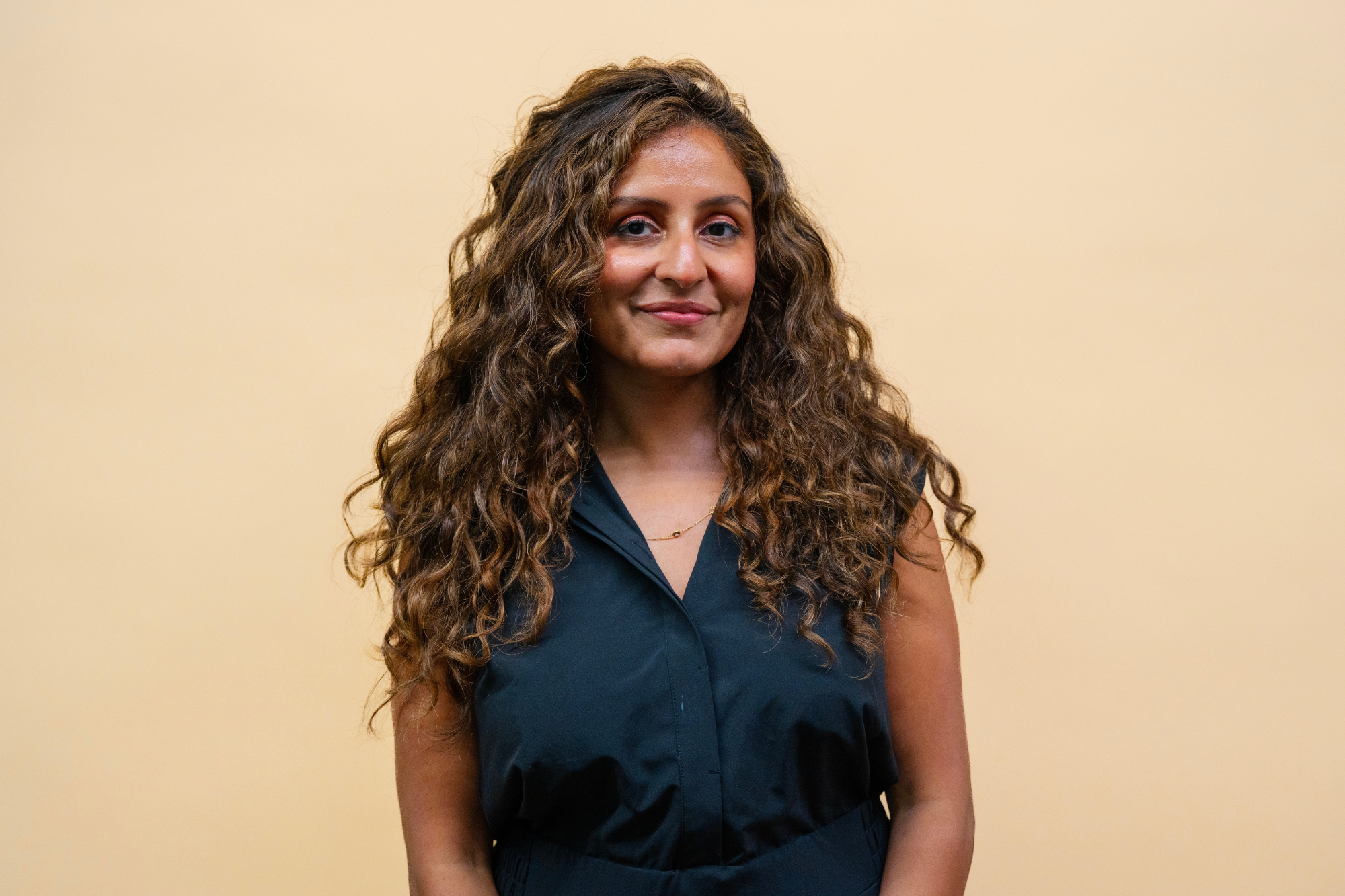
My name is Chandani Punia. I am an innovation practitioner with more than fourteen years of experience across the nonprofit and social impact sectors, focusing on human-centred design, inclusive innovation, and building programmes that uplift voices and create meaningful change. I am also an adjunct professor at Columbia University, run the consulting firm Immersive Futures, and recently launched Impactable.ai.
Although I normally live in New York, I have been in Finland since June 2025 for my academic visitor year, and it has been a wonderful experience so far.
The whole story actually began with a random message. A few years ago, I reached out to Apurva Ganoo on LinkedIn to explore whether there was potential for a knowledge exchange between Columbia and Aalto. That conversation led to my first official visit to Aalto. Apurva invited me to present in his entrepreneurship class, and he had an entire programme set up for me that day. I met the whole ENTU team and even colleagues who could help fund a continued faculty exchange.
At the time, I had just left my role with the International Rescue Committee in Bogotá, where I worked on the Venezuelan migration crisis. It was intense work, emotionally and professionally, and after that I wanted to do something different. I have always loved design, so Aalto first came onto my radar through its design and architecture school rather than its business school.
Over time, the collaboration grew. During the faculty exchange, Apurva came to New York, lectured in my course, and we visited different parts of the ecosystem together. It is quite rare to find a colleague in another country who is equally motivated about learning and entrepreneurship, and that relationship is a big part of why I am here now.
It surprised me when I counted it, but I have flown to Finland every three months since the past three years. I would come for Slush, for lectures, and whenever I was travelling somewhere else, I would make it a point to stop by Helsinki if I could. My main ecosystem here was always Aalto University.
The real motivation for returning for a year-long visit was the relationship that formed with the ENTU team. When you find people who are curious, collaborative, and excited about entrepreneurship education, you do not want to lose that. Every time I came, the same kinds of questions about programme development, teaching methods, and student engagement would come up. So, it made sense to formalise the relationship. Because of my startup work, I also have the flexibility to be more mobile, so the timing felt right.
My first impressions actually formed long before this summer. The first thing that struck me was how beautiful and intentional Aalto’s physical environment is. Because I teach human centred design, I pay a lot of attention to human experience and space, and Aalto’s buildings feel very facilitative for learning. They feel collaborative, open, clean, and well resourced.
Culturally, the contrast with New York is huge. New York is extremely fast paced, and people are always rushing. Here, I was impressed by how much time people created to exchange ideas. On my very first visit, the whole ENTU group went to lunch with me. Everyone was eager to talk, learn, and think together, even when ideas differed. That openness made a strong impression.
I have also enjoyed the small cultural things and the excitement around it – even pancakes on Thursdays, which I happened to catch again today! And then the sauna culture where it is very normal to go with colleagues. And from the entrepreneurship side, I found the community here incredibly encouraging. Even before launching my startups, I chose to speak with potential funders at Slush rather than at any US event because the community here felt more supportive. That is a really interesting contrast.
And then there is Finnish straightforwardness. In the US, especially in entrepreneurial settings, there can be a lot of embellishment and sales-driven culture. The honesty here feels refreshing.
Yes, I have noticed some meaningful differences. In the US, students tend to ask questions immediately, teachers welcome that, and participation happens very quickly. Here in Finland, students often begin more quietly. They come to listen, understand, and see where the discussion is going before opening up.
Another thing that stands out is how international the student body is here at Aalto. In every class, people bring examples from different parts of the world. Because the programme is not designed only for founders, students also bring a more critical and reflective lens to entrepreneurship. There is less ego and more thoughtfulness about value creation. The pace also feels different here. It is entrepreneurship, but with more intention behind it.
My teaching style is very workshop based, conversational, and informal. I adapt it depending on the setting. I remember my first guest lecture at Aalto was in a big lecture hall with more than a hundred students, and I told Apurva, my whole style is engagement, so how are we going to do this? We made it work with one wireless microphone. I enjoy bringing that style of learning and engagement here at Aalto.
Innovation is a big word, but I describe it as value creation. Human centred design is one aspect of innovation. It means deeply considering your customers or end users when you make decisions. It is intuitive, but it also challenges you to keep checking if you are truly putting them first. There are well established design thinking methodologies that help with that, and because I focus a lot on social and sustainable entrepreneurship, the lens fits very well.
Another methodology I am increasingly practicing is strategic foresight and futures thinking. It means imagining a different future and then backward map to create products and services that help us get there. When problems of today seem too big or too difficult to solve directly, this is a great way to keep pushing forward.
A lot of it comes down to being physically present on campus. The hosting agreement has made it possible for me to participate more deeply in teaching and seminars, and that has been meaningful. This morning, for example, I gave a guest lecture in Tamara Galkina’s Sustainable Venturing course, and it was really nice to see students engage with a workshop-oriented style of teaching.
One thing I am really enjoying is getting to know the student body. Meeting students in person helps me understand how they think, where they come from, and what kinds of questions they ask. That physical presence allows for a different kind of connection than what would be possible if I were still based in New York and only joining virtually.
Being on campus also makes it easier to embed myself in different activities. Even though I have previously done guest lectures and seminars during short visits, this year-long arrangement gives me the opportunity to become part of the everyday rhythm of teaching, learning, and programme development. I am really enjoying that.
I am a practitioner-teacher. For this reason, my approach to teaching is conversational and somewhat informal, and being here in person allows me to bring that into the classroom in a way that feels natural. I am excited to bring more workshop and co-design approaches to the programme and exchange ideas with the faculty. I have worked across finance, nonprofits, international development, and startups, and I have lived and worked in several countries. I think this global perspective helps me connect with students better.
As an outsider, I can also offer perspectives that are sometimes hard to notice when you are leading the work directly. I care about the programme and want to help amplify it. My hope is to contribute ideas that support the growth of ENTU and the continued development of the master's programme.
I also think people should be excited about the entrepreneurship ecosystem here. There is a tendency in Finland to focus on deficits like taxation or bureaucracy, but compared to other places, the community is supportive and the resources are strong. Finland is also physically close to Asia and Africa, and I am curious about the opportunities that could come from thinking beyond traditional centres like Silicon Valley.
For years, people told me I would make a good entrepreneur, but I never had an idea. I wish someone had asked me something as simple as ‘’What are five problems you experience daily that you wish someone solved, or what are five products and services you wish existed?’’ Those questions would have helped me start thinking in the right way.
Typical entrepreneurship culture focuses a lot on ideas. But what happens when you become committed to a problem? You can cultivate multiple ideas and possibilities. If one does not work, you have others to pursue. So, my advice is to care enough about a problem to really want to solve it.
Entrepreneurship is about reframing problems, thinking in multiple directions, and then converging on what makes sense.