
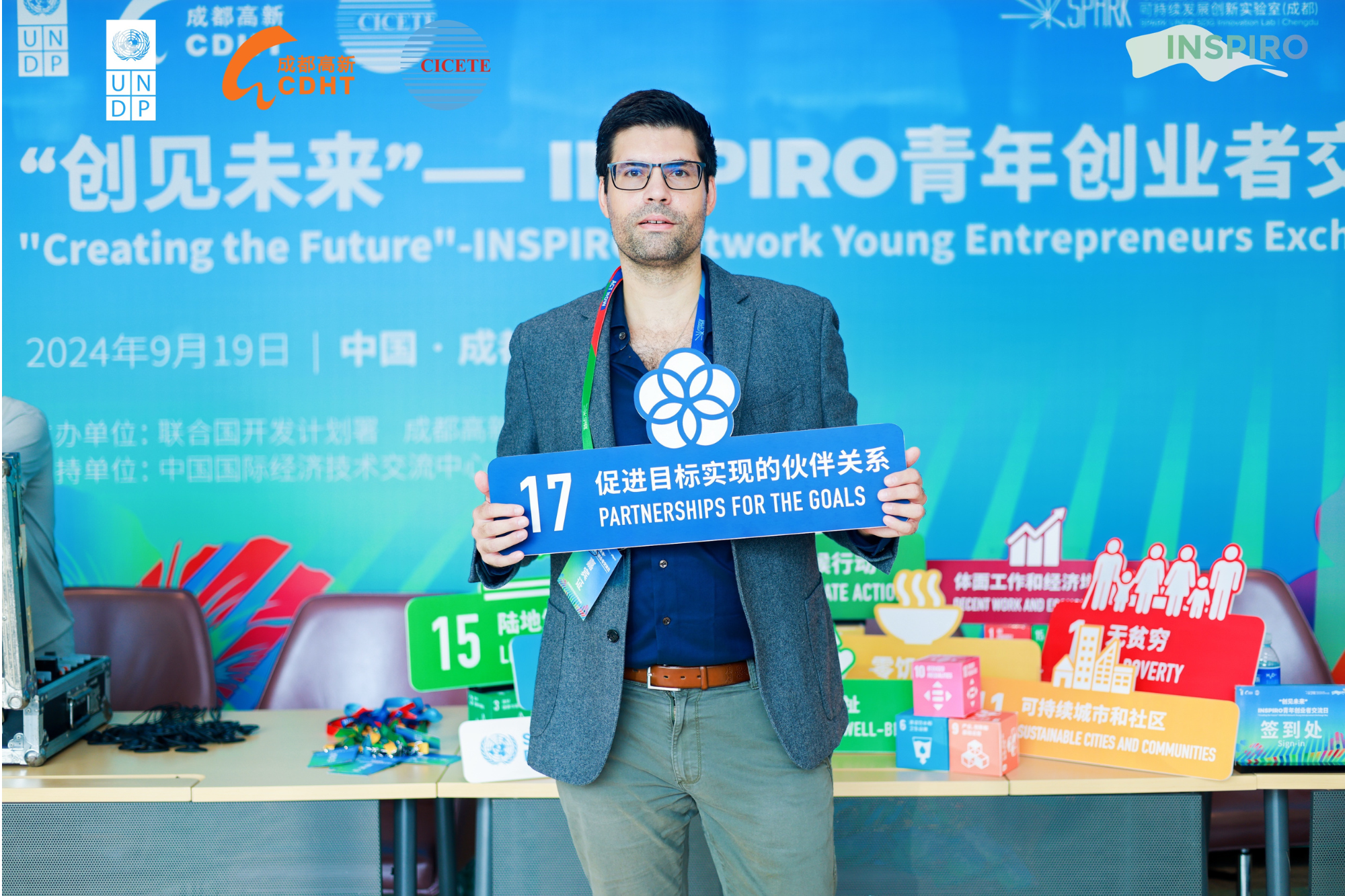
An “As Told To” interview by Kristaps Kovalonoks, Research Coordinator at Aalto University School of Business.
This interview is part of a first-person storytelling series highlighting the journeys, ideas, and insights of members and friends of Aalto University’s Entrepreneurship Unit (ENTU). Real stories, told in their own words.
What leads someone from a small countryside village in western Germany to doctoral research in entrepreneurship in Finland? For Thomas Hoeger, the path began in an entrepreneurial family, continued through studies in Germany, France and Finland, and eventually led him to Aalto University’s Entrepreneurship Unit. As the first person in his family to study at a university, Thomas became interested in a question he had seen many times in practice: why do some people act on entrepreneurial ideas, while others do not? Now close to completing his PhD, he reflects on his route to Finland, his research on what keeps potential entrepreneurs from putting ideas into action, and why he believes research should create value beyond academia.
I am a doctoral researcher in entrepreneurship at Aalto University's Entrepreneurship Unit, where I have been pursuing my PhD since 2021. Originally, I come from a small countryside village in western Germany, close to the Netherlands and Belgium, with only around 300 to 400 residents. I lived there for the first 18 years of my life, and then I realised that there is a whole world out there. That is when I started travelling, studying abroad, and exploring new opportunities.
Finland was already familiar to me growing up because my father worked for a Finnish company. We had a sauna at home, Finnish chocolate for Christmas, and Finland always had a positive meaning for our family, even though it was not particularly well known in Germany.
My first personal experience in Finland came through a double degree programme between the University of Vaasa and the European University Viadrina in Frankfurt (Oder) in Germany, where I was studying international business. I spent a year in Vaasa around 12 years ago and eventually graduated with degrees from both universities. During that time, I developed a strong appreciation for Finland and the Nordic countries, which ultimately played a role in my decision to return and pursue doctoral studies at Aalto University.
I come from a very entrepreneurial family. We had a lot of entrepreneurs in the family, so entrepreneurship was something I grew up with. But we did not have any academics in our family. So it was a big step to be the first generation to study at a university.
Before starting my doctorate, I was also an entrepreneur myself. I had two companies, including a consulting company and a trade-related business. I helped companies to enter Germany and German-speaking markets by doing market research, attending trade fairs and looking for market opportunities for my clients.
Over time, I became interested in something I had seen many times in practice. Some people seemed to have solid entrepreneurial ideas, but they never actually started a company. That made me curious about the psychological processes behind entrepreneurship. Why do some people act on their ideas, while others do not? What stops them from taking that step?
I had a lot of practical entrepreneurial knowledge, but I wanted to understand more of the theory behind it. Later, when I worked at Koblenz University of Applied Sciences, I taught entrepreneurship, marketing and organisational leadership. There, I realised that I really enjoy teaching. For me, teaching felt a bit like showing someone how to cook, so they make a good meal themselves. I liked the idea of enabling students to understand the business world and then go out there and do something meaningful. That is when the idea of doing a PhD became stronger.
I already knew Aalto University from my time in Vaasa. I knew it was a very good and well-known university, so when I decided to apply for a PhD, Aalto was a natural place to consider. It was not easy, and it took some time, but eventually I was accepted into ENTU.
I came to Finland at the end of 2021, in the middle of Covid. That was not an easy time to start doctoral studies. There were not many people in the office, many doctoral courses were online, and the ENTU team was much smaller than it is today. Still, I started taking doctoral courses at Aalto and other universities and began to dig much deeper into entrepreneurship research.
Over time, I came to appreciate Aalto and ENTU even more. We have a strong infrastructure, good office spaces, helpful colleagues and professors who are very down to earth. What I also value is that ENTU is international by nature. We have people from all over the world, so the unit is open, inclusive and willing to help people integrate. For me, it has been a place where people care and try to bring out the best in you.
My research looks at what keeps potential entrepreneurs from putting their ideas into action. In entrepreneurship research, this is often called the intention-action gap. Many people have entrepreneurial intentions, but not all of them actually take the next step to act on them. I want to understand what barriers stand in their way and how we can more meaningfully support people on their entrepreneurial paths.
My work sits at the crossroads of psychology, sociology and entrepreneurship. I started by looking broadly at why people may not become entrepreneurs, even when they have ideas or intentions. Over time, my research became more focused on research commercialisation and deep tech startups.
That focus is important to me because many innovative and sustainable ideas already exist inside universities and research organisations. But if they are not translated into real-world applications, they cannot benefit our society. Through my PhD, I have worked with VTT and with other incubators and accelerators in Finland and the US. I have conducted around 65 interviews with people who want to become entrepreneurs or are already in the process of becoming entrepreneurs. I look at topics such as motivation, team conflict, and the difficulties people face when moving from an idea towards entrepreneurship.
During Covid, many doctoral courses moved online. Instead of only looking at the negative side of the pandemic, I tried to see the opportunity. I reached out to universities and researchers abroad and asked whether I could join relevant entrepreneurship courses online. Some of them took place very late in the evening Finnish time, sometimes from 11 p.m. to 2 a.m., but through those courses I got to know researchers from places such as Harvard and MIT.
Later, I reached out to a professor at Harvard, explained my research and asked whether there could be an opportunity to collaborate. I still had to go through the official process, but eventually I was accepted as a visiting researcher. While I was there, I learned more about research commercialisation practices, visited innovation environments such as Harvard Innovation Labs and the Deshpande Center for Technological Innovation at MIT, and had many discussions with people working on deep tech startups and research commercialisation.
For me, this experience also says something about creating your own opportunities. Very often, people do not dare to reach out and ask. But what is there to lose? The worst thing that can happen is that someone says no, and then you are in the same place as before. Nobody simply handed me access to incubators, accelerators or research contacts. I had to create many of those opportunities myself, usually by approaching people in a very down-to-earth manner.
I would not necessarily say that everything comes easily to me. Sometimes, I am also afraid to reach out or ask for something. But I still try to do it anyway. In Germany, we say that you have to jump over your shadow. Even when something feels uncomfortable, you do it. I would say I try to have an opportunity mindset or a positive mindset: to see what could be possible, reach out and give things a shot.
It depends on whether I am teaching or not. In general, doing a PhD involves a lot of working alone on your computer. That is something future doctoral researchers should know. It is not only about talking to interesting people or teaching all the time. Very often, it means sitting alone in a room, reading, analysing and writing.
On a typical day, I work on my research articles. Sometimes I teach, and sometimes I meet colleagues to discuss research, for example an article we are working on. Earlier in the PhD, data collection also took a lot of time, especially as a qualitative researcher. That meant travelling, meeting people and conducting interviews, but nowadays my work is more focused on writing and developing the articles.
I also try to make space for impact work. In the evenings, I often attend networking events to connect with entrepreneurs, investors, and policymakers, teach in incubators, or work with organisations such as Startup Refugees. For me, the overall goal is still the same: to help people with entrepreneurial ideas to become entrepreneurs, and to connect academic work with society.
For me, one of the most meaningful parts has been that my research and work can create real-world impact. I like that my work is not only theoretical. Through my PhD, I have been able to work with organisations such as VTT and Startup Refugees, and contribute to questions that matter beyond academia.
With Startup Refugees, for example, the work is about helping people use entrepreneurship to create opportunities, jobs and value for Finnish society. Oftentimes, refugees are discussed as a burden for society, but we can also look at the opportunities and potential they can bring. Through entrepreneurship, people can contribute to society in many ways, including by creating work and economic value.
That practical focus matters to me. Academia can sometimes become a bubble, or what people call the ivory tower. That is against my values. I do not do research only for other academics. I try to work for the whole society.
I would tell myself to be even more bold and to create more of my own opportunities. There is support available, but in the end, you also have to become active yourself.
That means reaching out to people, asking questions, making connections and giving things a shot, even when the answer might be no. Very often, people do not dare to ask, but the worst thing that can happen is usually that someone says no. Then you are still in the same place as before.
So, my advice would be: do not only wait for external help. Be active, be open and create your own path. Many opportunities are not automatically visible at the beginning, but they can appear when you take the first step.